
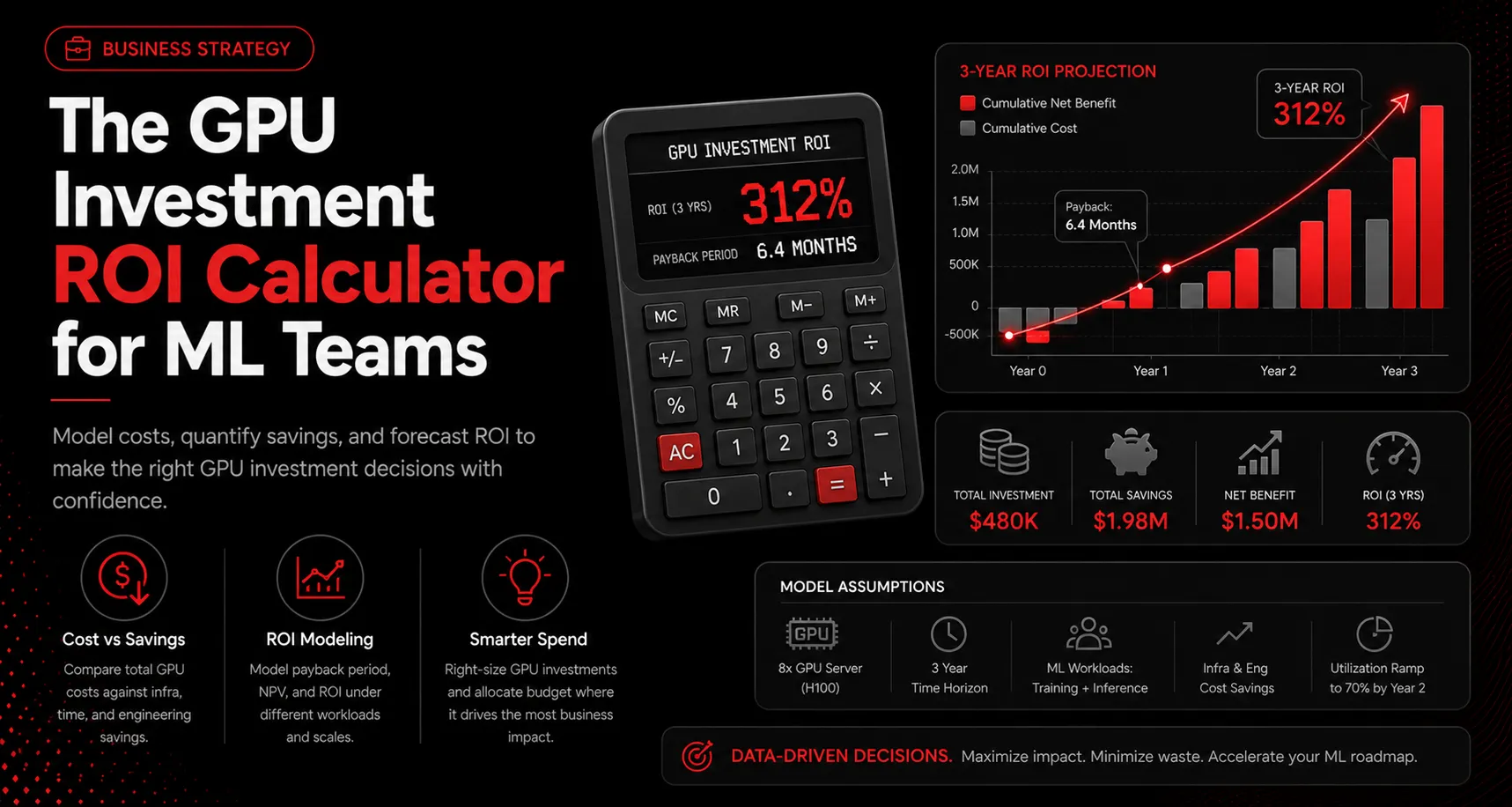
GPU budgets are large and growing, yet many teams have no model for whether an optimization project pays off. Here is a simple way to think about it.
The cost you actually pay
Your GPU bill is roughly the number of GPUs times their hourly cost times hours run. The hidden variable is utilization. A fleet running at 40 percent utilization is paying full price for less than half the work.
Optimization is a one-time cost against a recurring bill
Suppose optimization doubles throughput per GPU. That lets you serve the same traffic on half the GPUs, or twice the traffic on the same fleet. Against a monthly bill, a one-time engineering investment that halves the fleet typically pays for itself in weeks, then keeps saving.
Model it with three numbers
Estimate current monthly GPU spend, the expected throughput improvement from optimization, and the cost of the optimization work. If monthly spend is high and the improvement is a realistic 2x, the payback period is short and the multi-year return is large.
Do not forget latency value
Faster inference is not only cheaper. Lower latency improves user experience and conversion, which can matter more than the infrastructure savings for customer-facing products.
When adding GPUs is right
If your code is already well optimized and utilization is high, buying more capacity is the correct move. ROI thinking simply ensures you optimize before you scale, not after.
Key takeaways
- Utilization, not GPU count, drives your effective cost
- Optimization is a one-time cost against a recurring bill
- A realistic 2x improvement usually pays back in weeks
- Value lower latency alongside raw cost savings
- Optimize first, then scale when utilization is already high